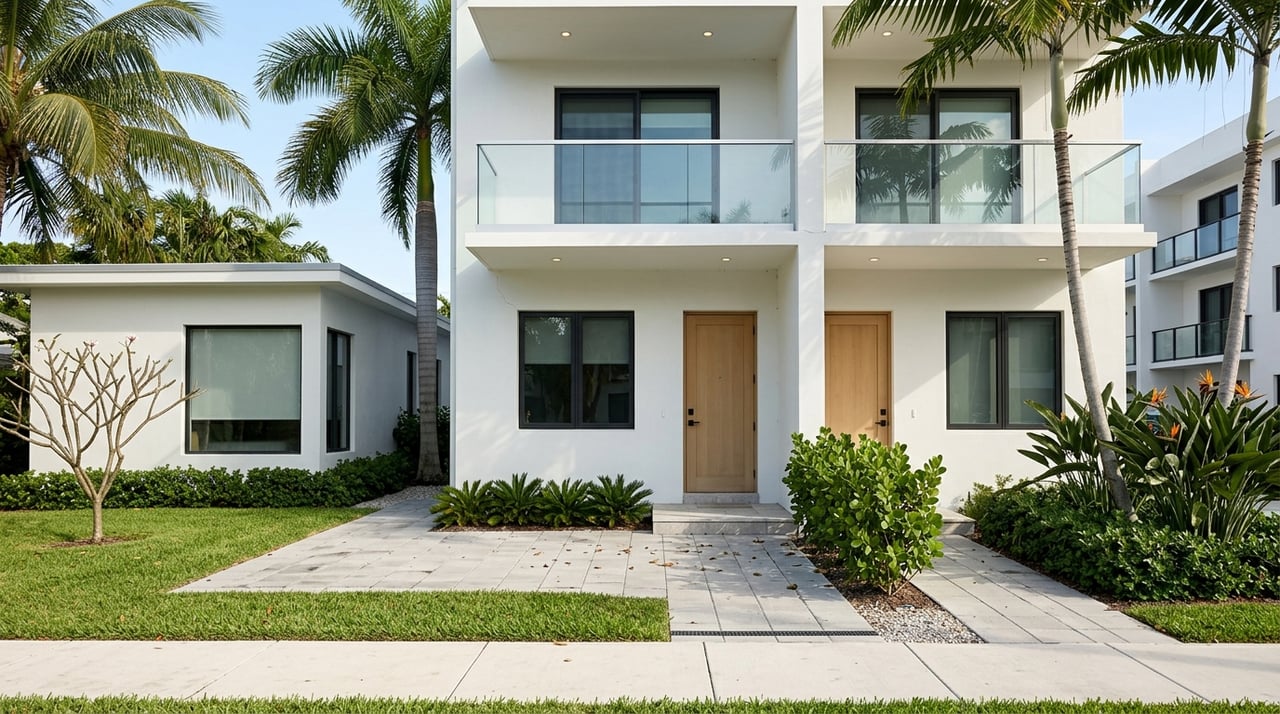
If you want to buy in Miami Shores, one of the biggest questions is also one of the most important: should you choose a condo, a townhome, or a house? In a village known for its predominantly single-family layout, each option offers a very different mix of price, maintenance, privacy, and control. This guide will help you compare the tradeoffs, understand what to review before you buy, and choose the property type that best fits your lifestyle and budget. Let’s dive in.
Miami Shores Housing Options
Miami Shores is not a market where every property type shows up in equal numbers. The Village describes itself as a mostly single-family residential community, with a predominantly single-family land-use pattern and only a limited number of multifamily dwellings and townhomes.
That local context matters when you start your search. If you want the broadest selection and the most traditional Miami Shores ownership experience, houses will usually make up the largest share of what you see. If you want an attached home, you may find fewer choices, but you may also find a lower entry point.
Recent market data shows how wide that gap can be. In 2025, the median sale price for a Miami Shores single-family home was $1,217,500, while the Q1 2026 median for Miami Shores condos and townhouses was $280,000.
Compare Price in Miami Shores
For many buyers, budget is the first filter. In Miami Shores, property type can change your price range dramatically.
Public listing snapshots reinforce that point. Current examples show condos from about $259,000 to $719,000, townhomes from about $285,000 to $1.429 million, and houses from about $629,000 to $5.3 million.
That does not mean one option is automatically better than another. It means your money may buy a very different ownership experience depending on the property type you choose.
Condo Price Position
A condo can offer one of the most accessible ways to buy in Miami Shores. Current public portal data shows condo inventory with median asking levels around the low $300,000s, along with examples under and above that mark depending on size, location, and amenities.
If your goal is to stay in Miami Shores while keeping your purchase price lower than a detached home, a condo may deserve a serious look. That is especially true if you value shared amenities and lower day-to-day exterior maintenance.
Townhome Price Position
Townhomes often sit in the middle. Some are priced close to condos, while others rise much higher based on waterfront features, gated settings, garage space, and community amenities.
In Miami Shores, the townhome category can be especially wide. Because inventory is limited and features vary a lot, you may need to compare each townhome on its own terms rather than assume all townhomes offer the same value.
House Price Position
Houses usually represent the highest price tier in Miami Shores. That reflects the Village’s single-family character, larger lot-based options, and the added privacy and flexibility that detached ownership can provide.
If you want yard space, room for future projects, or a home with more separation from neighbors, a house may justify the higher price. The key is deciding whether that extra control matches how you actually want to live.
What Condo Living Means
A condo usually offers the least direct maintenance responsibility for the owner. Under Florida’s Condo Act, the association is generally responsible for maintaining the common elements unless the declaration assigns certain limited common elements to the unit owner.
That can make daily ownership simpler. Instead of managing as many exterior issues yourself, you will usually rely more on the association for building upkeep, records, budgeting, and operations.
In Miami Shores, current condo listings also point to a shared-amenity lifestyle. Visible examples include bayfront or water-view buildings, pool access, water access, security, assigned or covered parking, card rooms, and in-unit laundry.
Condo Pros
- Lower direct day-to-day exterior maintenance
- Often lower purchase price than a detached house
- Shared amenities may add convenience
- Good fit if you prefer a lock-and-leave lifestyle
Condo Tradeoffs
- More dependence on association governance and financial health
- Rules and use restrictions may affect how you live in the property
- Assessments and reserve funding matter a great deal
- Building condition should be reviewed carefully before you buy
Condo Due Diligence in Florida
This is where condo expertise really matters. For condo buildings that are three habitable stories or higher, Florida requires milestone inspections at age 30 and every 10 years after that, along with structural integrity reserve studies at least every 10 years.
For a buyer, that means you should not stop at the unit itself. You should also review the declaration, bylaws, rules, budget, reserve information, meeting minutes, and ask whether there are pending assessments, whether required inspections have been completed, and whether reserves appear adequately funded.
What Townhome Living Means
Townhomes can be appealing because they often blend private-entry living with some shared services. In Miami Shores listings, current examples range from waterfront townhomes with direct bay access and private docks to gated community options with a two-car garage, pool, clubhouse, and community park.
But there is one important point many buyers miss: in Florida, “townhome” is not one single legal ownership model. A property marketed as a townhome may be fee-simple with an HOA, or it may be condominium-form ownership.
That is why the recorded declaration matters more than the label in the listing. Before you buy, you need to confirm exactly what you own and who is responsible for what.
Townhome Pros
- Often more privacy than a condo
- Usually less exterior upkeep than a detached house
- Private entry can feel more house-like
- May include garages, community amenities, or waterfront access
Townhome Tradeoffs
- Ownership structure can vary significantly
- HOA rules may affect parking, exterior changes, rentals, or pets
- Fees and assessments may still apply
- Maintenance responsibilities are not always obvious from the listing
Townhome Due Diligence
For townhomes, review the governing documents closely. Florida HOA law allows associations to enforce rules and, when authorized by the declaration, regulate items like architectural changes.
You should verify exterior-maintenance responsibility, architectural-approval rules, parking rules, rental limits, pet rules, and any special-assessment history. A townhome can be an excellent middle-ground option, but only if the rules match your expectations.
What House Living Means
A detached house usually gives you the most direct control. In Miami Shores, that is especially relevant because the Village’s planning and land-use pattern strongly centers on single-family homes.
If you are drawn to larger private lots, more outdoor space, or future customization, a house may be the strongest fit. Current listing examples support that pattern, with homes showing lot-based advantages like room for a pool, detached garages, one-car garages, and new-construction options.
House Pros
- Highest level of privacy and owner control
- More flexibility for outdoor space and lot use
- Better fit for buyers who want customization potential
- Strong alignment with Miami Shores’ single-family character
House Tradeoffs
- Highest purchase prices in many cases
- More direct responsibility for maintenance and repairs
- Exterior projects may still require permits and approvals
- Not every house is free from HOA or covenant restrictions
House Due Diligence
Even with a detached home, freedom is not unlimited. Miami Shores zoning regulates land use, and the Village Building Department enforces building codes, local ordinances, and state laws.
If you are thinking ahead to additions, exterior improvements, or major updates, verify what is allowed before you buy. If the property is also subject to an HOA, review those documents too.
Match the Property to Your Lifestyle
Once you understand the legal and financial differences, the next step is practical: how do you want to live day to day?
The cleanest way to think about it in Miami Shores is simple. A condo usually means shared amenities and less maintenance. A townhome usually means a private entry with some shared services. A house usually means the most privacy and the most yard control.
Choose a Condo If You Want
- A lower-maintenance ownership style
- Shared amenities such as a pool, security, or assigned parking
- A lower entry price than many detached homes
- A home that may feel easier to manage day to day
Choose a Townhome If You Want
- A middle-ground option between condo and house living
- More privacy than a typical condo
- Some shared services without giving up a private entry
- Features like a garage, gated setting, or community amenities
Choose a House If You Want
- The most flexibility and independence
- Private outdoor space and lot-based living
- More room for customization over time
- A property type that reflects the dominant character of Miami Shores
A Simple Way to Decide
If you are still torn, try asking yourself three questions. First, how much maintenance do you really want to handle? Second, how important are privacy and flexibility? Third, what price range feels comfortable for both purchase and ongoing ownership?
In most Miami Shores searches, the pattern is clear. Detached houses usually offer the most flexibility, townhomes usually offer a middle ground, and condos usually offer the least owner control but the least direct maintenance.
That does not make one option right for everyone. It simply means the best choice is the one that fits your priorities, not just the listing photos.
If you want help comparing Miami Shores condos, townhomes, or houses with a close eye on building governance, association risk, and day-to-day livability, Leonor Ortiz can help you sort through the details and choose with confidence.
FAQs
What is the main difference between a condo, townhome, and house in Miami Shores?
- In Miami Shores, a condo usually offers shared amenities and less direct maintenance, a townhome often offers a private entry with some shared services, and a house usually offers the most privacy, yard control, and owner flexibility.
Are condos in Miami Shores usually less expensive than houses?
- Yes. Recent market data shows a much lower median price for Miami Shores condos and townhouses than for single-family homes, making attached housing a lower entry point for many buyers.
Why do townhomes in Miami Shores require extra review before buying?
- In Florida, a townhome can be fee-simple with an HOA or condominium-form ownership, so you need to review the recorded declaration to understand ownership rights, rules, and maintenance responsibilities.
What should condo buyers review before buying in Miami Shores?
- Condo buyers should review the governing documents, budget, reserve information, meeting minutes, building condition, any pending assessments, and whether required milestone inspections or reserve studies apply and have been completed.
Do detached houses in Miami Shores still have rules?
- Yes. Detached homes are still subject to Miami Shores zoning, building-code enforcement, and in some cases HOA or covenant rules that may affect changes to the property.
Which property type offers the most flexibility in Miami Shores?
- Detached houses usually offer the most flexibility, townhomes are often the middle ground, and condos usually offer the least owner control but less direct maintenance.